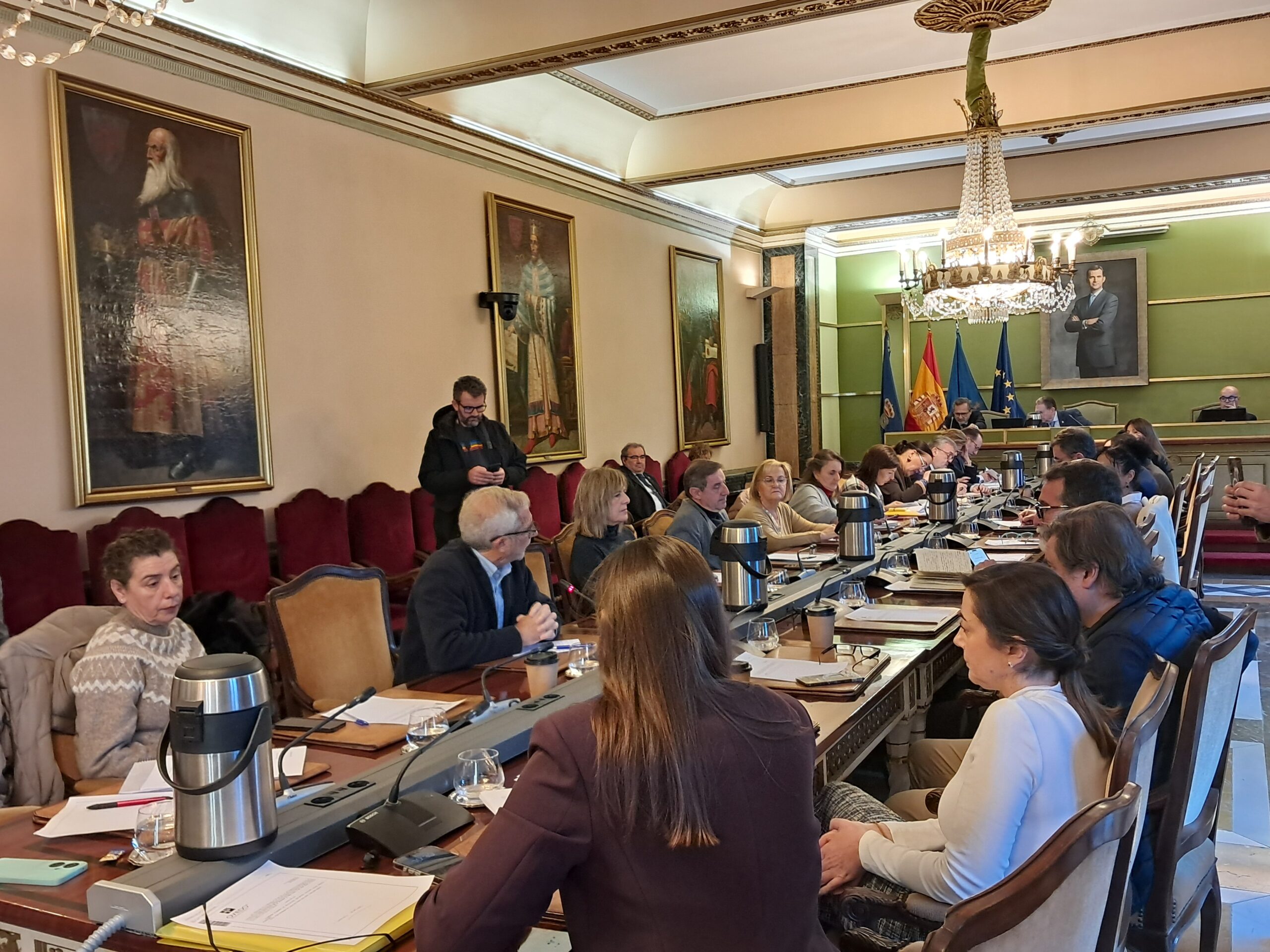
The Governing Board of the Municipal Culture Foundation approved on Monday, by unanimous vote of all members present —the Vox group did not attend the session— the Oviedo 2025–2035 Strategic Culture Plan (PECO 2035). The document sets out the main guidelines for the city’s cultural policy over the next decade and becomes a fundamental tool to strengthen Oviedo’s bid for European Capital of Culture in 2031.
The plan was drafted by the Oviedo 2031 team in collaboration with Fundación Kreanta, a leading entity in cultural planning and urban development. The result marks a turning point in the city’s cultural strategy and opens a new phase focused on innovation, participation and social transformation.
The municipal groups took an active role in the drafting process, holding meetings with both the bid team and Kreanta’s technical staff. From the outset, the aim was to create a consensus-based document that would guarantee long-term continuity and implementation. The director of Oviedo 2031, Rodolfo Sánchez, highlighted the intensity of the work and stated: “It is only fair to acknowledge the effort made by our team, led in this task by coordinator Pepe Mompeán, territorial coordinator Zoe López, and the entire Kreanta Foundation staff, who have been able to produce in record time a major future plan for culture in Oviedo.”
The PECO 2035 is the result of a broad participatory process that incorporated contributions from cultural agents, citizens, institutions and experts. The document responds to the needs identified during this phase of listening and sets the foundation for a profound renewal of Oviedo’s cultural ecosystem. It views culture as a fundamental right that must be guaranteed for the entire population, regardless of origin, economic situation, age, gender or abilities, and recognises its role as a driver of social cohesion and well-being.
The plan proposes an integrated and cross-cutting vision that links cultural action to all areas of municipal government, placing the development of cultural rights at the centre of its strategy. It also conceives citizen participation as an open and continuous process, in constant dialogue with local stakeholders.
One of the core elements of the document is its strategy for cultural facilities, aimed at optimising existing resources and expanding them with new infrastructures. Among the most significant projects are the future Casa de las Artes and the planned interventions at the former La Vega arms factory, which will include a new central library, a performing arts venue, a film school and a contemporary creation centre with exhibition space.
The PECO 2035 outlines a contemporary, participatory and sustainable cultural model that strengthens sector governance, supports artistic creation and the growth of the local cultural ecosystem, promotes an accessible and inclusive cultural life and positions diversity as a strategic asset. The plan also acknowledges the connection between culture and sustainable urban development, highlighting the role of libraries as community cultural spaces, the relationship between culture and education, the participation of children and young people, the engagement of older adults and the integration of urban and rural areas as key elements of the city’s identity.
In addition, the document emphasises the importance of cultural heritage and landscape as drivers of development, ensuring their protection and responsible use for the benefit of the community and future generations. Its management model covers monumental heritage, intangible heritage and rural culture, all considered essential resources for the projection and uniqueness of Oviedo.
While the bid for European Capital of Culture will act as a catalyst for many of these processes, the PECO 2035 is conceived as a long-term structural project that extends beyond 2031. Its objective is to consolidate culture as one of Oviedo’s major strategic drivers over the coming decade.
With its approval, Oviedo equips itself with a solid and shared cultural vision that combines tradition, innovation and citizen participation to build a more creative, cohesive and sustainable future.