Oviedo presents Europenses, a new European space for contemporary thought
The candidacy of Oviedo as European Capital of Culture 2031 presents a new programme that invites us to pause, think and engage in conversation through culture. Under the name Europenses, the initiative is launched in the framework of Europe Day as one of the strategic projects included in its bidbook, with the aim of creating a space for reflection on the major issues shaping today’s European agenda, in dialogue with the Asturian context.
In a context marked by acceleration, discourtesy and increasing polarisation in public debate, Europenses proposes a change of pace. In contrast to immediacy and noise, it seeks to open spaces for thoughtful conversation, reclaiming culture as an essential tool to address issues that directly affect democracy, coexistence and our shared future.
The programme is conceived with a long-term vision, as one of the cultural legacies of the candidacy. Through different editions, with guest curators and across various venues in the Principality, it will address key topics on the European agenda in connection with the local territory.
This first edition is structured around Amabilidá, a central concept in Oviedo 2031’s cultural proposal. Far from being understood as a superficial attitude, it is presented as a critical tool to rethink how we inhabit the world and how we relate to others in a present shaped by hostility and the fragility of social bonds.
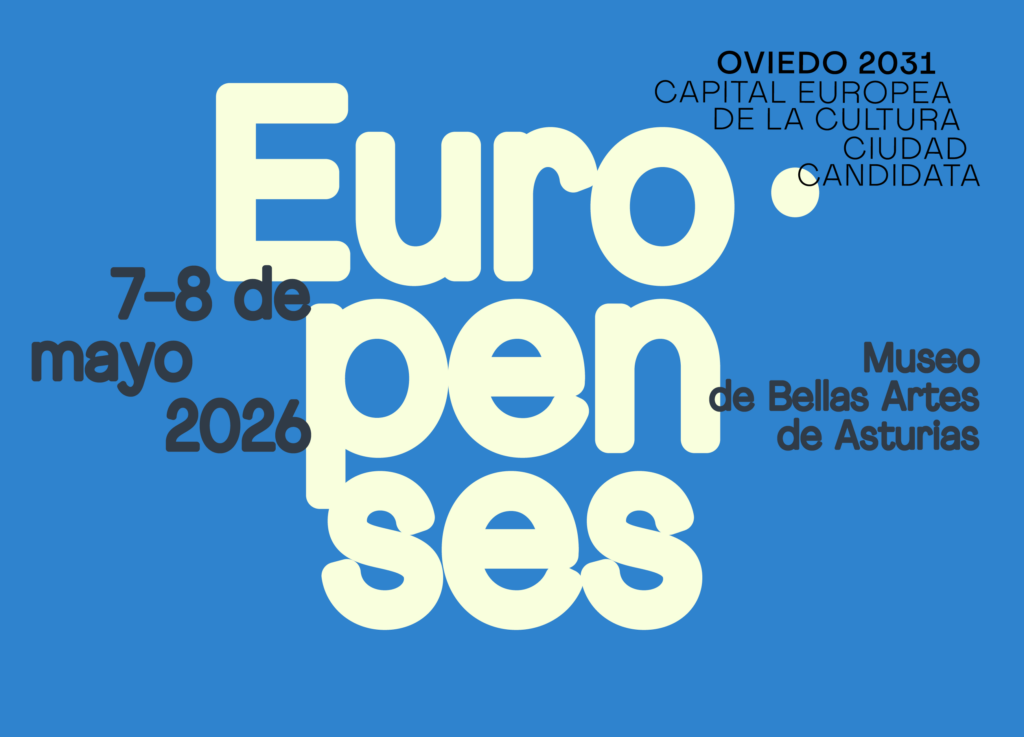
The sessions will take place on 7 and 8 May at 7:00 PM at the Museum of Fine Arts of Asturias, curated by Giselle Etcheverry Walker. The first day, The Age of the Rude, will bring together philosopher Renata Salecl and sociologist César Rendueles, in a conversation moderated by journalist Sergio C. Fanjul. The following day, The Craft of Inhabiting will feature philosopher Corine Pelluchon, thinker Marta Tafalla and musician and researcher Xosé Ambás, moderated by Helena Torres.
In addition, during their stay in the city, Renata Salecl and Corine Pelluchon will take part in book signings at the Oviedo Book Fair, where they will present their latest works, Ateşiz (Tyrants?) (Maleducados) and A Democracy Without Domination, strengthening the connection between the programme and the city’s cultural ecosystem.
The name Europenses revives one of the earliest documented references to the term “Europeans”, recorded in an 8th-century chronicle. A way of looking to the past to rethink the present and to reaffirm Europe as a shared cultural construction, based on values such as coexistence, respect and cooperation.
With Europenses, Oviedo continues moving forward on its path towards 2031, reinforcing its commitment to culture as a space for thought, dialogue and collective construction.